Screen printing, embroidery or transfers
Choosing the right decoration method starts with the garment, the artwork and the finish you want. Studio Silkscreen helps businesses, schools and organisations match the job to the method.
Start with the garment and the result you want
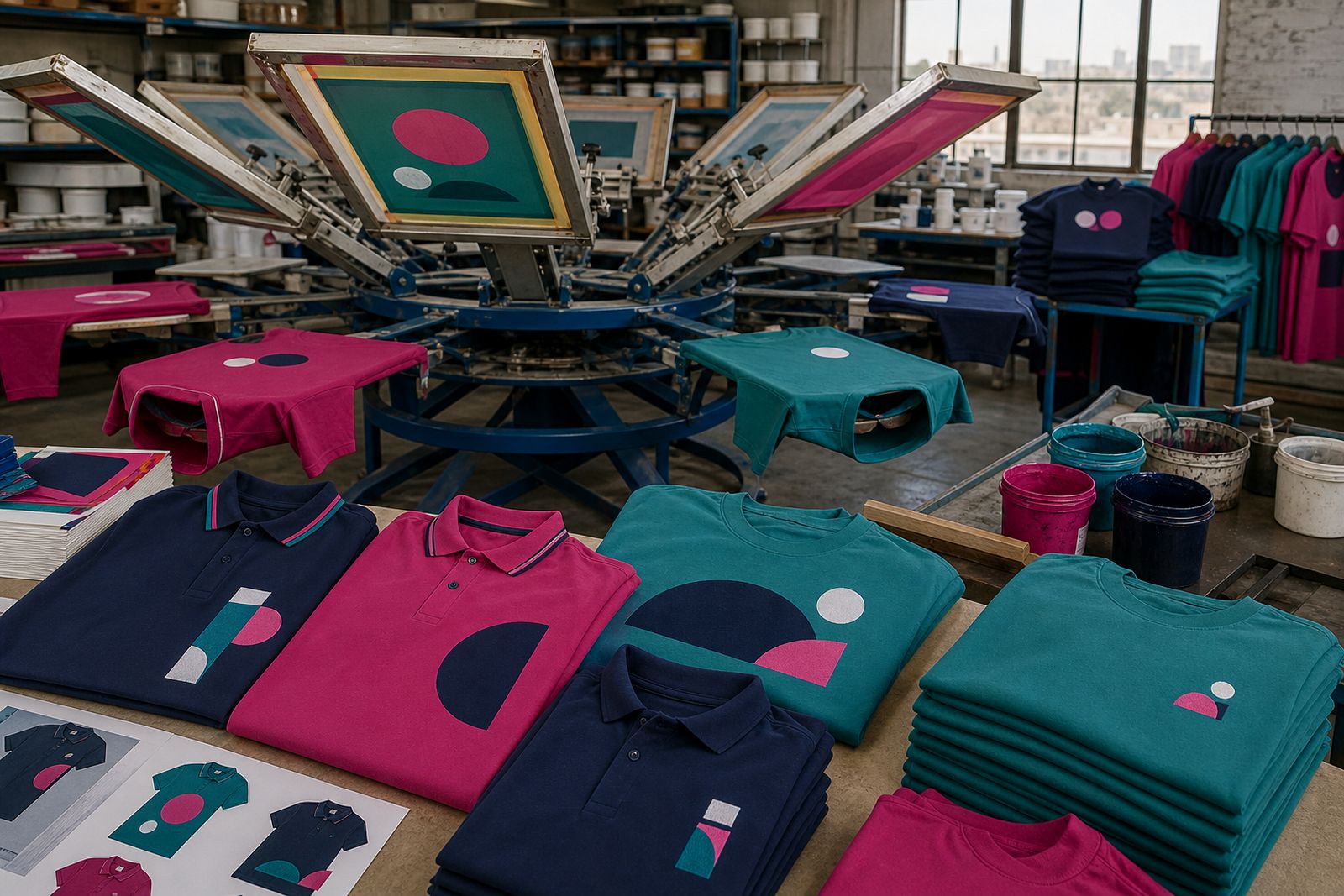
Screen printing, embroidery and heat transfers each suit different garments and different kinds of branding. The right choice depends on what you are decorating, how many garments you need, how many colours are in the artwork and the look you want when the job is finished.
At Studio Silkscreen in Johannesburg, everything is handled in house, from artwork and production to quality control. That makes it easier to look at a job properly and recommend whether it belongs in screen printing, embroidery or heat transfers. And when screen printing is not suitable, embroidery or transfers may be a better choice.
When screen printing makes the most sense
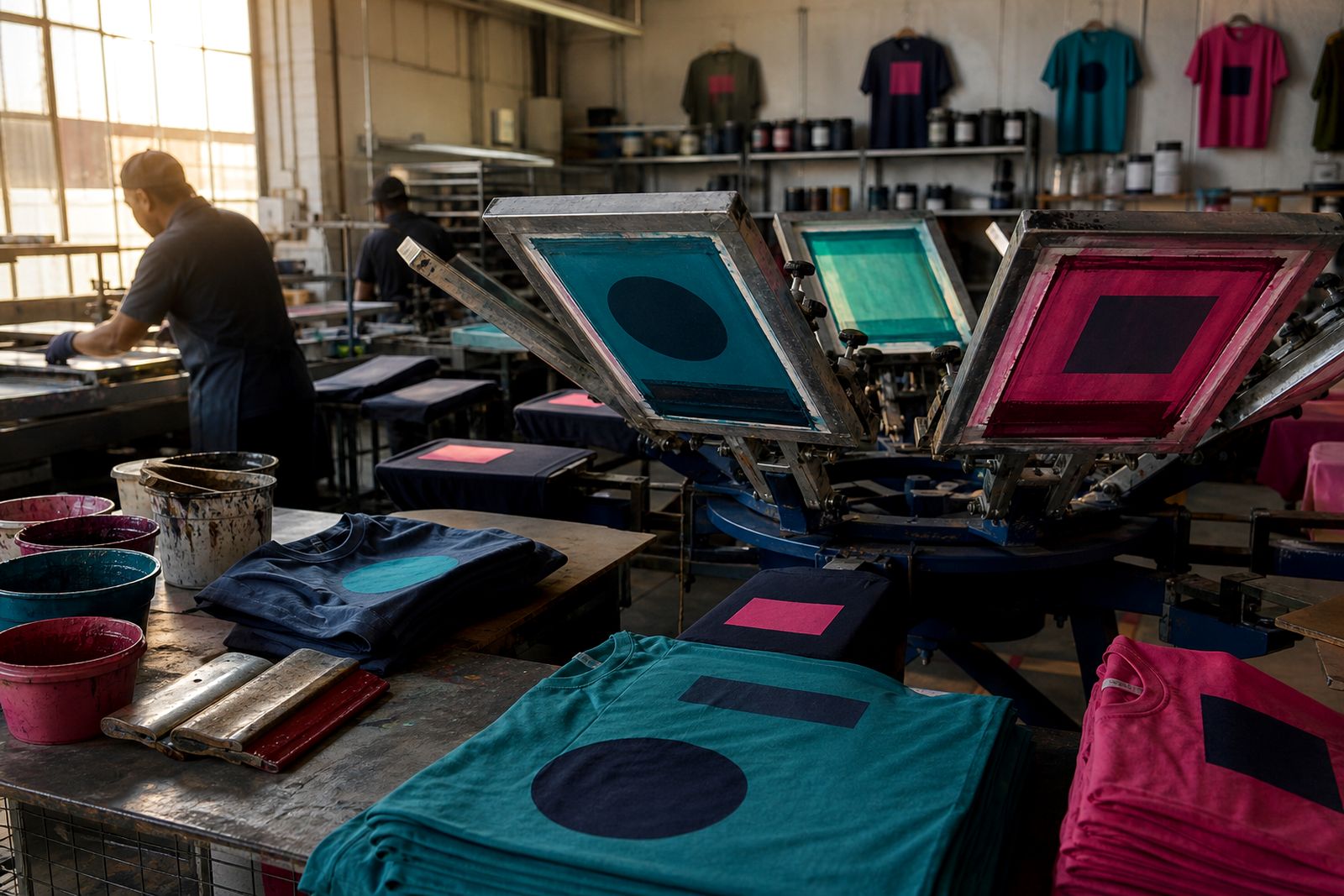
Screen printing on clothing is what we do. It is usually the best fit for larger runs where you want strong, clean colour and a consistent printed finish across t-shirts, golf shirts, promotional clothing and corporate wear. Spot colour artwork is especially well suited to screen printing, and Studio Silkscreen can print multi colour spot colour designs.
It is also a good choice when a logo or message needs impact. Full front or back prints on adult garments can be wider than smaller crest prints. For full colour images, process printing can be used where the artwork allows it. You can read more about print areas and colours and how artwork is prepared on the artwork page.
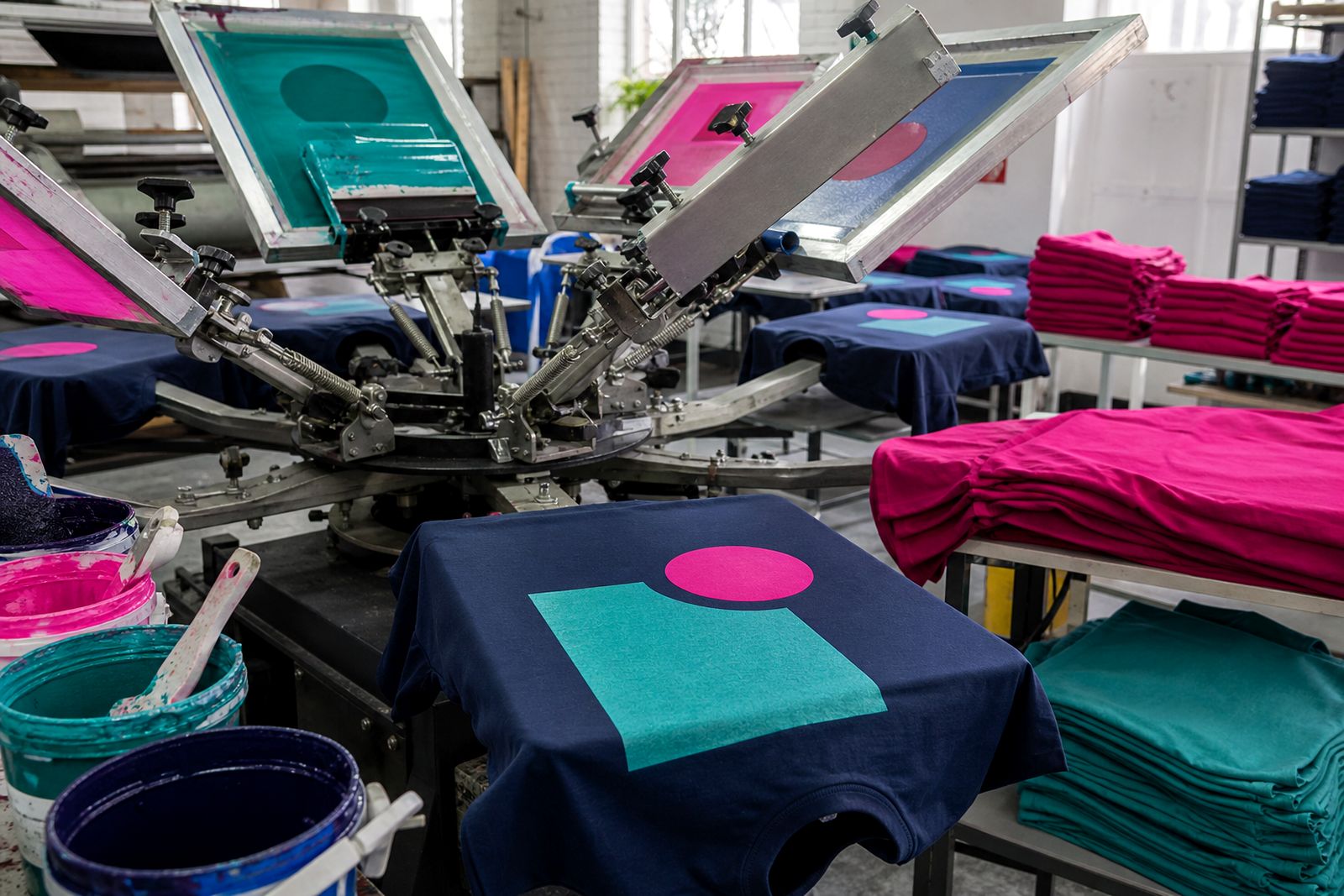
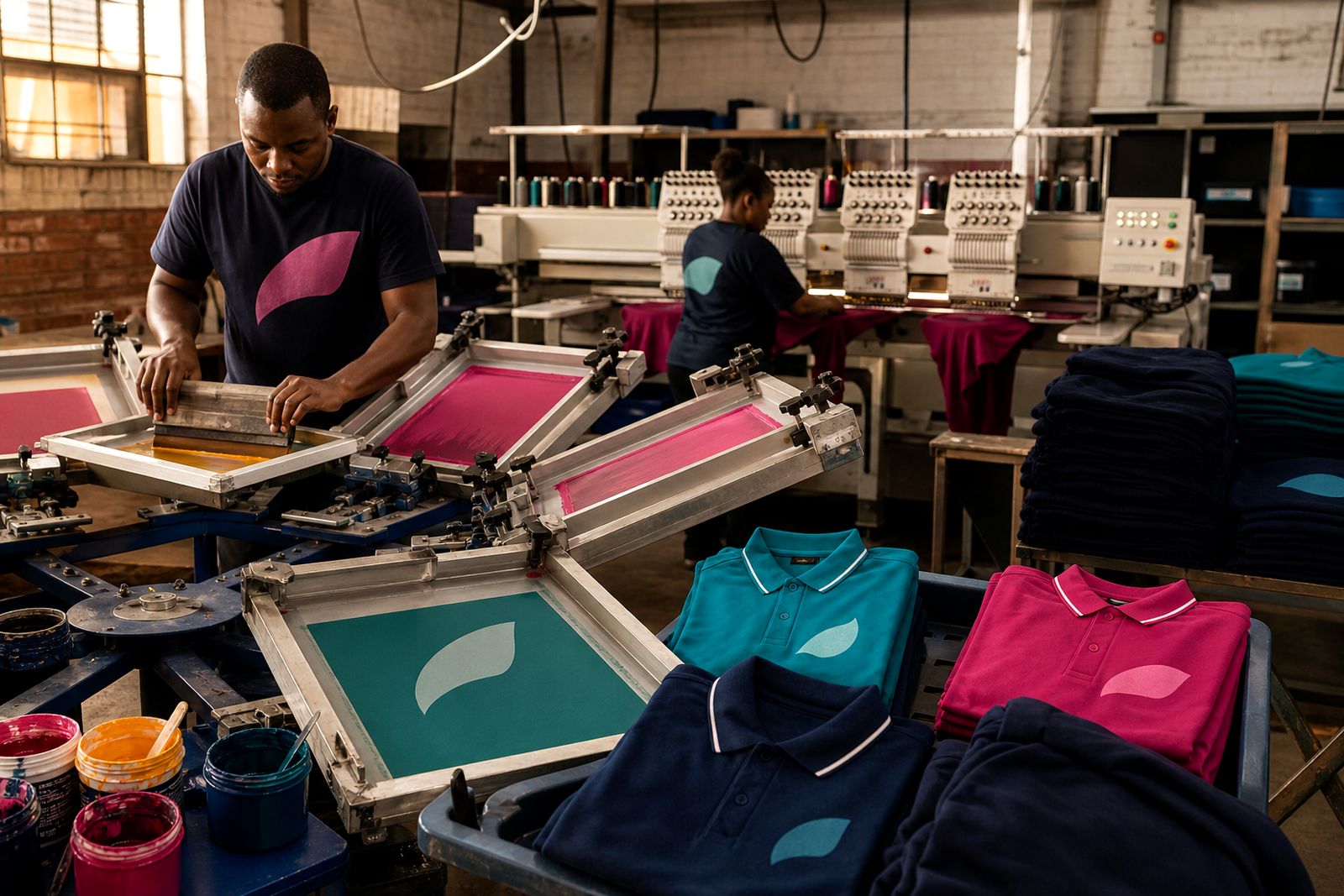
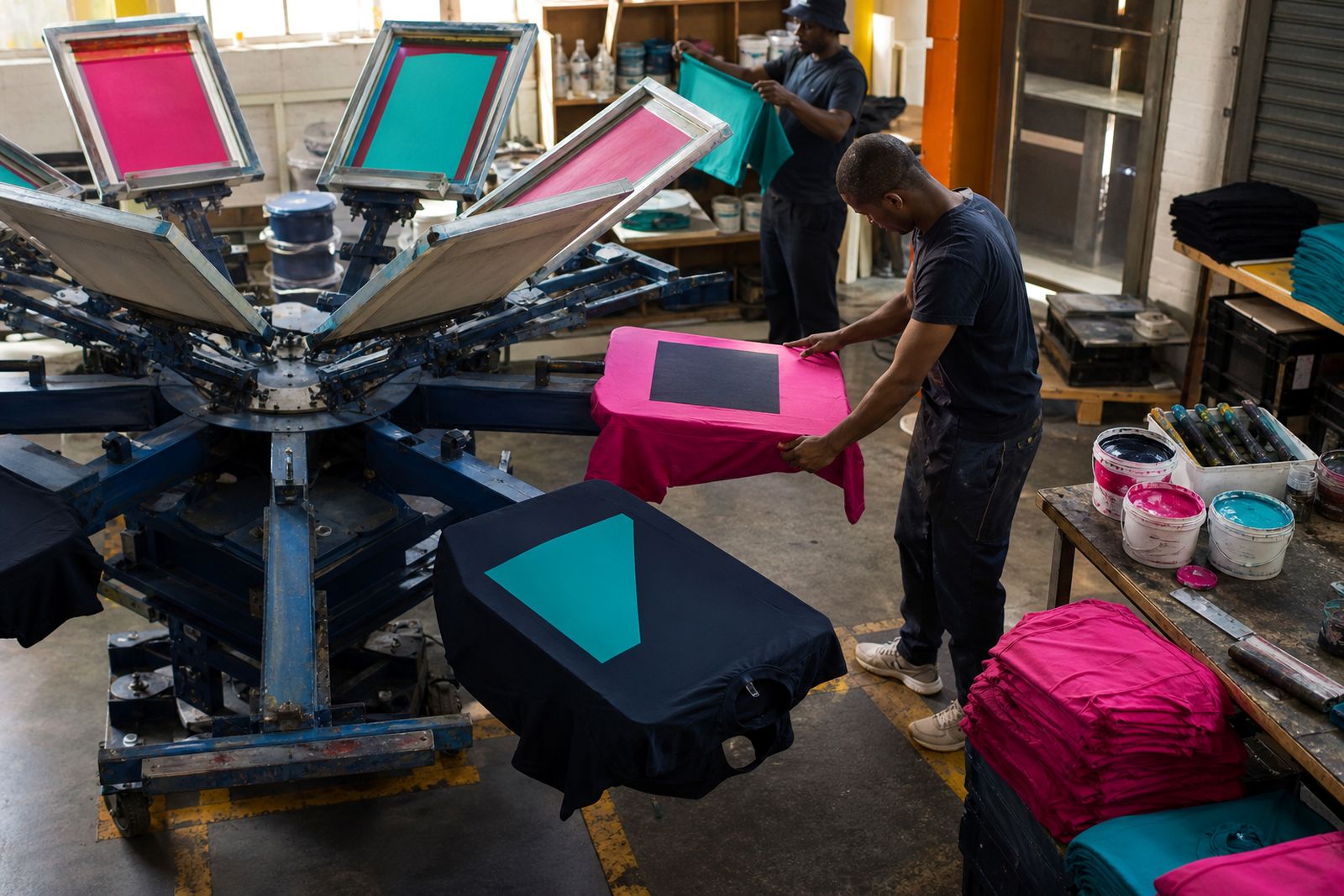
In our own works, screens are prepared in the exposing room, then checked, touched up, washed and reused. For larger runs, automatic presses are used, while smaller simpler jobs can run on hand carousels. Every garment goes through quality control before it leaves us.
When embroidery is the better finish
Embroidery gives a different result from print. It has texture, a more structured look and a lasting feel, which is why it is often chosen for golf shirts, caps and jackets. It also works well for monograms, embroidered logos and patches, including puff embroidery where the design suits that effect.
Embroidery is based on stitch count after digitising, so the design itself matters. Satin and step satin stitches are used according to the shape and detail of the logo. If you are comparing options for branded polos or headwear, embroidery is often the method people choose when they want a neat corporate finish rather than a printed one.
Studio Silkscreen also does embroidery on screen printed garments, which can be useful when a range includes different decoration positions or different garment types. More detail is available on logos and patches and digitising and stitch count.
Where transfers solve difficult jobs
Heat transfers are often the practical answer for smaller runs, full colour images, synthetic fabrics and items that are not ideal for conventional screen printing. Transfers are printed in reverse on transfer paper with plastisol inks, then heat pressed briefly. That makes them useful for difficult designs and for garments or items where direct printing is not the best route.
They are well suited to bags, caps, umbrellas and synthetic garments, and they are also a strong option for personalisation. Names and numbers can be cut from vinyl and heat pressed onto garments for teamwear, staff identification or individually marked items.
- Choose transfers for smaller runs.
- Choose transfers for full colour image work.
- Choose transfers for names and numbers.
- Choose transfers for synthetics and hard to print items.
You can read more about full colour transfers and names and numbers.
How to send the right information for a quote
The easiest way to get the right recommendation is to send your artwork and order details through the contact form. Include the garment type, where the branding must go, an idea of quantity, and whether you need a bold printed look, a stitched logo or individual names and numbers. If you already know the garment, that helps narrow the method quickly.
Artwork can be supplied as CorelDRAW, PDF, AI or EPS, with fonts converted. Vector artwork is best for spot colour work, and bitmaps should be high resolution at print size. An in house graphics department can help with design, colour separations and film positives where needed. Once the job details are reviewed, Studio Silkscreen sends a written quote, then completed orders are collected or sent by courier delivery.
If you want to understand the production flow in more detail, see how a print job runs, or go straight to contact form with your enquiry.
Also worth a look
Get a quote for your printed clothing
Send the garments, quantities, colours and your artwork through our contact form and we will come back with questions or a written quote.
Open the contact form